
Healthy soil is the foundation of successful gardening and farming. Whether you are growing vegetables, flowers, or trees, the quality of your soil directly affects how well plants grow.
In recent years, many gardeners and growers have started using sheep wool fertiliser pellets as a natural way to improve soil health while providing essential nutrients for plants.
But what makes wool fertiliser different from other organic fertilisers?
In this article, we explore the key benefits of wool fertiliser pellets and why they are becoming one of the most popular organic fertilisers in Ireland and across Europe.
What Makes Wool Fertiliser Unique?
Wool fertiliser pellets are made from compressed sheep wool fibres. Wool is naturally rich in nutrients, particularly nitrogen, which plants need for healthy growth.
Unlike many fertilisers that release nutrients immediately, wool fertiliser works slowly. As soil microorganisms break down the wool fibres, nutrients are gradually released into the soil.
This makes wool pellets a slow release organic fertiliser, providing long-lasting nutrition while improving soil conditions at the same time.
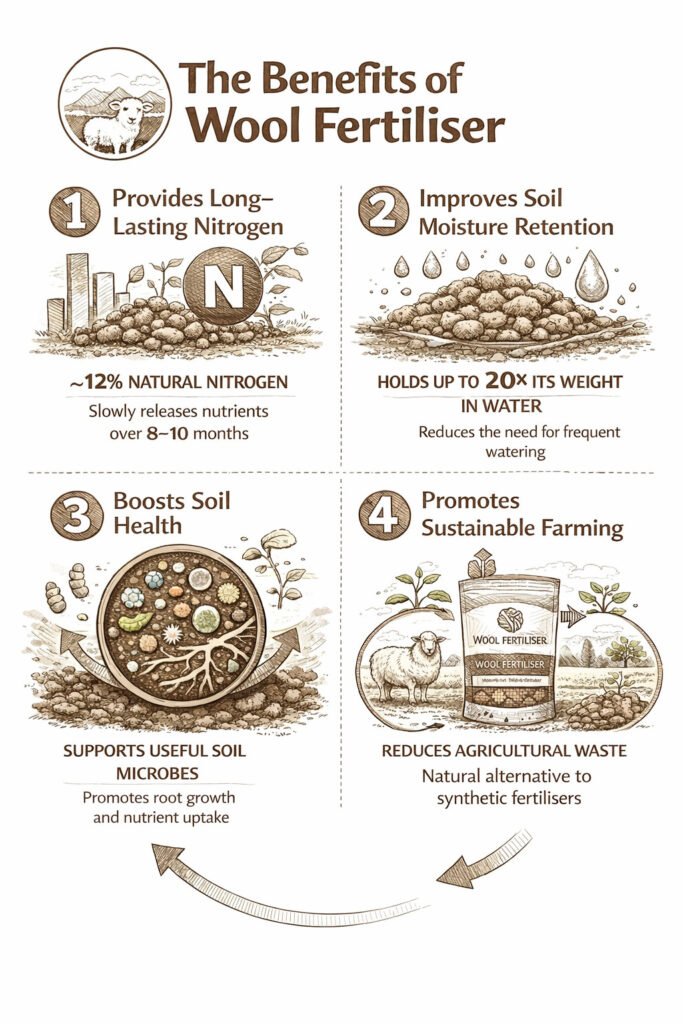
1. Provides Slow-Release Organic Nitrogen
Nitrogen is one of the most important nutrients for plant growth. It helps plants develop strong leaves, stems, and overall healthy growth.
Sheep wool naturally contains organically bound nitrogen, which becomes available to plants as the fibres break down in the soil.
Because this process happens gradually, wool fertiliser provides:
- steady plant nutrition
- reduced risk of over-fertilisation
- fewer applications compared to fast-release fertilisers
For gardeners looking for a natural nitrogen fertiliser, wool pellets are an excellent solution.
2. Improves Soil Structure
Healthy soil is not just about nutrients — it is also about structure.
When wool pellets break down, the fibres help improve the physical structure of the soil. This creates spaces within the soil that allow air and water to move more freely.
Improved soil structure helps:
- plant roots grow deeper
- oxygen circulate in the soil
- soil organisms thrive
Over time, this leads to healthier, more biologically active soil.
3. Helps Soil Retain Moisture
Water retention is a major challenge for gardeners, especially during dry weather.
One of the unique properties of wool is its ability to absorb and retain moisture. Wool fibres can hold several times their own weight in water.
When wool fertiliser pellets are mixed into soil, they act like tiny water reservoirs. This allows moisture to be stored and gradually released back into the soil.
Benefits include:
- reduced watering requirements
- improved plant resilience during dry periods
- healthier root systems
This is particularly helpful for vegetable gardens and container plants, where soil can dry out quickly.
4. Supports Soil Microorganisms
Healthy soil contains billions of microorganisms that help break down organic matter and release nutrients for plants.
Because wool fertiliser is a natural organic material, it supports the activity of these soil microbes.
As the wool fibres decompose, they provide food for microorganisms, which helps create a more active and balanced soil ecosystem.
This process improves:
- nutrient cycling
- organic matter content
- overall soil fertility
5. Contributes to Sustainable Gardening
Another important benefit of wool fertiliser pellets is their environmental sustainability.
Sheep farming produces large quantities of wool each year. Some of this wool is not suitable for textiles and may otherwise go unused.
By turning wool into fertiliser pellets, this natural material can be returned to the soil in a useful way.
This approach supports a circular agricultural system, where natural resources are reused rather than wasted.
For gardeners looking to reduce reliance on synthetic fertilisers, wool fertiliser offers a more environmentally responsible option.
6. Long-Lasting Soil Benefits
Many fertilisers provide a short burst of nutrients but do little to improve soil quality.
Wool fertiliser pellets are different because they contribute organic material to the soil as they break down.
Over time, this helps build healthier soil by increasing:
- organic matter levels
- microbial activity
- soil structure
These long-term improvements make wool fertiliser a valuable addition to sustainable gardening practices.
Where Wool Fertiliser Works Best
Wool fertiliser pellets can be used in many different gardening situations.
They are particularly useful for:
Vegetable Gardens
Nitrogen-rich wool fertiliser supports strong leafy growth in vegetables.
Pots and Containers
The moisture retention properties help prevent container plants from drying out.
Flower Beds
Perennials and ornamental plants benefit from the slow release of nutrients.
Trees and Shrubs
Long-lasting nutrition supports steady growth and healthier root systems.
Organic Fertiliser Made from Irish Sheep Wool
At Sneem Organic Wools, we produce fertiliser pellets using locally sourced sheep wool from Ireland.
Manufactured in Sneem, County Kerry, our wool fertiliser provides a natural way to improve soil health while supporting sustainable agriculture.
Our pellets deliver:
- slow-release organic nitrogen
- improved soil structure
- better moisture retention
- sustainable fertiliser production
A Natural Way to Improve Soil Health
Building healthy soil takes time, but the right fertiliser can make a significant difference.
Sheep wool fertiliser pellets offer a unique combination of benefits: they feed plants, improve soil structure, support microorganisms, and help retain moisture.
For gardeners and growers looking for a natural fertiliser that supports both plant growth and long-term soil health, wool fertiliser pellets are an excellent choice.