
Growing vegetables successfully starts with healthy soil. Vegetables are heavy feeders, meaning they require a steady supply of nutrients to grow strong, produce healthy leaves, and develop good yields.
While many gardeners once relied on synthetic fertilisers, more people today are turning to organic fertilisers for vegetable gardens. These natural fertilisers not only feed plants but also improve soil structure and support long-term soil health.
In this guide, we explore the best organic fertilisers for vegetable gardens, how they work, and which options provide the greatest benefits for your plants.
Why Organic Fertiliser Is Better for Vegetable Gardens
Organic fertilisers are made from natural materials that improve soil health while feeding plants.
Unlike chemical fertilisers that deliver nutrients quickly and then disappear, organic fertilisers work gradually. Soil microorganisms break down the organic material and release nutrients slowly over time.
Benefits of organic fertilisers include:
- improved soil structure
- better water retention
- increased microbial activity
- steady nutrient release
- long-term soil fertility
For vegetable gardeners who want healthy crops and healthy soil, organic fertilisers provide a balanced and sustainable solution.
Types of Organic Fertilisers for Vegetables
There are many natural fertilisers available to vegetable gardeners. Each type offers different nutrients and benefits.
Below are some of the most commonly used organic fertilisers.
Compost
Compost is one of the most widely used organic fertilisers in home gardens.
It is made from decomposed organic materials such as food waste, leaves, and plant matter.
Benefits of compost include:
- adding organic matter to soil
- improving soil structure
- supporting beneficial microorganisms
Compost works best as a soil conditioner rather than a concentrated fertiliser.
Manure
Animal manure has been used in agriculture for centuries.
Common types include:
- cow manure
- horse manure
- poultry manure
Manure provides nutrients while increasing organic matter in soil.
However, it should usually be composted before use to avoid burning plants or introducing pathogens.
Seaweed Fertiliser
Seaweed fertilisers are popular because they contain a wide range of trace minerals and plant growth stimulants.
Seaweed can help:
- strengthen plant growth
- improve stress resistance
- enhance soil biology
Many gardeners use seaweed extracts as liquid fertilisers or soil amendments.
Bone Meal
Bone meal is made from ground animal bones and is commonly used as a phosphorus-rich fertiliser.
Phosphorus helps support:
- root development
- flower formation
- fruit production
Bone meal is often used when planting bulbs or fruiting plants.
Sheep Wool Fertiliser Pellets
One of the most innovative organic fertilisers gaining popularity is sheep wool fertiliser pellets.
These pellets are made by compressing raw sheep wool fibres into small granules that can easily be mixed into soil.
Wool naturally contains high levels of nitrogen, making it an excellent fertiliser for leafy vegetable growth.
But wool fertiliser provides more than just nutrients.
Why Wool Fertiliser Works So Well for Vegetables
Vegetables require consistent nutrition throughout the growing season. Wool fertiliser pellets are particularly effective because they provide slow-release nutrients.
As wool fibres break down in the soil, they gradually release nitrogen while improving soil conditions.
Benefits of wool fertiliser pellets include:
Slow Release Nitrogen
Wool contains naturally occurring nitrogen that becomes available to plants as the fibres decompose.
This steady release helps vegetables grow consistently without sudden nutrient spikes.
Moisture Retention
Wool fibres can absorb several times their weight in water.
This helps vegetable beds retain moisture, which can reduce watering needs and support plant growth during dry periods.
Improved Soil Structure
As wool breaks down, the fibres improve soil aeration and structure.
This creates better conditions for root development and microbial activity.
Long-Lasting Fertiliser
Unlike many fertilisers that require frequent application, wool fertiliser pellets can continue feeding plants over several months.
This makes them a convenient and effective option for vegetable gardens.
Best Vegetables for Wool Fertiliser
Because wool fertiliser is naturally rich in nitrogen, it works particularly well for vegetables that benefit from strong leafy growth.
Examples include:
- lettuce
- cabbage
- spinach
- kale
- broccoli
- courgettes
- tomatoes
These vegetables respond well to steady nutrient supply during the growing season.
How to Use Organic Fertiliser in Vegetable Beds
To get the best results from organic fertilisers, apply them during soil preparation or planting.
Typical application methods include:
- mixing fertiliser into soil before planting
- placing fertiliser near the root zone
- incorporating fertiliser into compost or soil blends
Watering after application helps activate the natural breakdown process.
Organic Fertiliser Made from Irish Sheep Wool
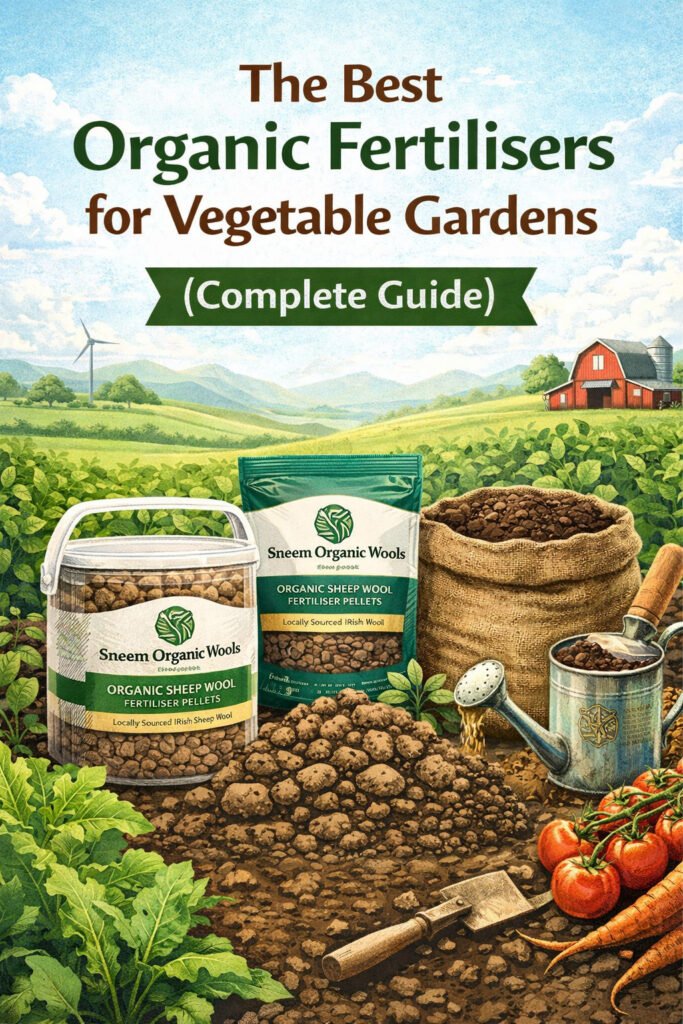
At Sneem Organic Wools, we produce natural fertiliser pellets using locally sourced Irish sheep wool.
Manufactured in County Kerry, our wool fertiliser provides a sustainable alternative to synthetic fertilisers.
Our pellets support:
- slow-release organic nutrition
- improved soil structure
- moisture retention
- sustainable soil management
By turning wool into fertiliser, we help return natural materials back to the soil where they belong.
Grow Healthier Vegetables Naturally
Vegetable gardens thrive when soil is healthy, nutrient-rich, and biologically active.
Organic fertilisers help create these conditions while supporting long-term soil fertility.
Among the many options available, sheep wool fertiliser pellets offer a unique combination of nutrition, moisture retention, and soil improvement that makes them particularly valuable for vegetable growers.