
If you’re searching for a natural fertiliser for plants, you’ve probably come across the growing interest in sheep wool fertiliser pellets. Gardeners, growers, and farmers are increasingly turning to wool-based fertilisers as a sustainable alternative to synthetic chemicals.
But what exactly are wool fertiliser pellets, and why are they becoming so popular in organic gardening?
In this guide, we’ll explain how organic wool fertiliser pellets work, their benefits for soil health, and why they are quickly becoming one of the most effective slow release organic fertilisers available in Ireland and beyond.
What Are Sheep Wool Fertiliser Pellets?
Sheep wool fertiliser pellets are made from compressed raw sheep wool fibres that have been processed into small pellets suitable for use in soil.
Wool is naturally rich in nutrients — particularly nitrogen — which plants need for healthy growth. As the wool breaks down in the soil, it gradually releases these nutrients, feeding plants over an extended period.
Unlike synthetic fertilisers that release nutrients immediately, wool pellets work slowly, providing a steady supply of nutrients while improving soil health at the same time.
How Wool Fertiliser Works in Soil
Wool fibres are made mostly of keratin, a natural protein that soil microorganisms gradually break down. During this process, nitrogen and other nutrients are released into the soil where plant roots can absorb them.
Research shows that wool pellets can increase soil microbial activity and improve nutrient availability, which helps plants grow stronger and healthier.
This slow breakdown process means that wool fertiliser acts as a long-lasting organic fertiliser, feeding plants for months instead of days or weeks.
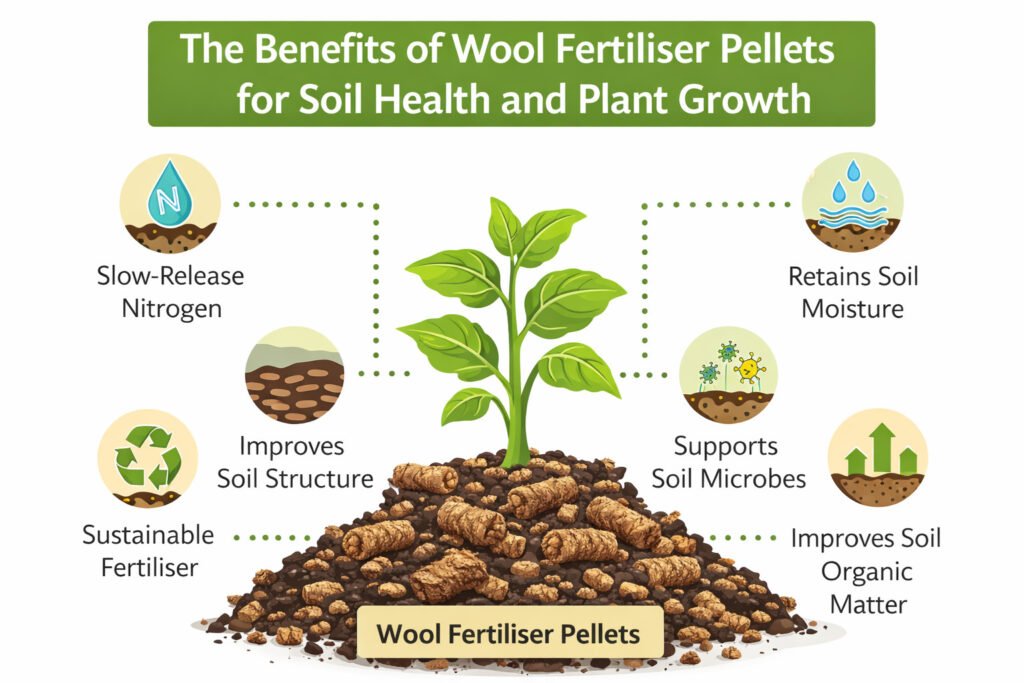
Key Benefits of Wool Fertiliser Pellets
1. Slow Release Nutrients
One of the biggest advantages of sheep wool fertiliser is its slow-release nutrient profile.
Wool pellets gradually release nitrogen as they decompose, providing plants with a consistent nutrient supply over time.
This helps prevent:
- nutrient runoff
- plant burn from over-fertilisation
- repeated fertiliser applications
Many gardeners find they only need to apply wool fertiliser once per season.
2. Improves Soil Structure
Healthy soil isn’t just about nutrients — it’s about structure and biology.
As wool fibres break down, they improve soil aeration and create small pockets that allow roots to expand more easily.
This improved soil structure helps:
- root growth
- oxygen circulation
- microbial activity
Over time, this contributes to living, biologically active soil.
3. Helps Soil Retain Moisture
Another major benefit of wool fertiliser pellets is their ability to hold water in the soil.
Wool fibres can absorb several times their own weight in water, releasing moisture slowly back into the surrounding soil.
This helps plants survive dry conditions and can reduce the amount of watering required in gardens and containers.
For gardeners growing vegetables, flowers, or plants in pots, this can make a significant difference during warm summer months.
4. Supports Sustainable Gardening
Wool fertiliser pellets are also an excellent example of circular agriculture.
Much of the wool produced by sheep farming is unsuitable for textile use and often becomes waste. By converting this wool into fertiliser pellets, farmers and manufacturers can turn a natural by-product into a valuable soil amendment.
This approach:
- reduces agricultural waste
- supports sustainable farming
- returns organic material back into the soil
It’s a simple but powerful way to garden more sustainably.
5. Natural Slug Deterrent
Many gardeners report that wool pellets can help reduce slug and snail damage.
The coarse fibres in wool can act as a physical barrier around plants, making it difficult for slugs to reach stems and leaves.
While this is not a guaranteed pest control method, it can provide an additional layer of protection when used around vulnerable seedlings.
What Plants Benefit Most From Wool Fertiliser?
Sheep wool fertiliser pellets can be used in a wide range of gardening situations.
They are particularly useful for:
Vegetable Gardens
Tomatoes, cabbage, lettuce, potatoes, and other nitrogen-hungry vegetables respond well to wool fertiliser.
Pots & Containers
Because wool retains moisture, it is excellent for plants growing in pots.
Fruit Trees & Shrubs
Wool pellets can provide steady nutrition around the root zone.
Flower Beds
Perennials and ornamental plants benefit from slow nutrient release.
Why More Gardeners Are Choosing Wool Fertiliser
Interest in organic fertiliser Ireland has increased dramatically in recent years as gardeners look for more sustainable ways to grow food and plants.
Wool fertiliser offers a unique combination of benefits:
- slow-release nutrients
- improved soil structure
- better moisture retention
- sustainable raw materials
- compatibility with organic gardening
For many growers, it represents a natural alternative to traditional chemical fertilisers.
Organic Wool Fertiliser Made in Ireland
At Sneem Organic Wools, we produce natural fertiliser pellets from locally sourced Irish sheep wool in County Kerry.
Our mission is simple: transform a natural agricultural by-product into a fertiliser that supports healthy soil, sustainable farming, and thriving gardens.
Our wool fertiliser pellets provide:
- slow-release organic nutrition
- improved soil health
- natural moisture retention
- a sustainable alternative to synthetic fertilisers
Try Wool Fertiliser in Your Garden
If you’re looking for a natural fertiliser that improves soil while feeding plants, wool fertiliser pellets are one of the most effective organic solutions available.
By working with nature instead of against it, they help build healthier soil and stronger plants over time.
✔ Explore our wool fertiliser pellets and start growing naturally today.